




Product engineering
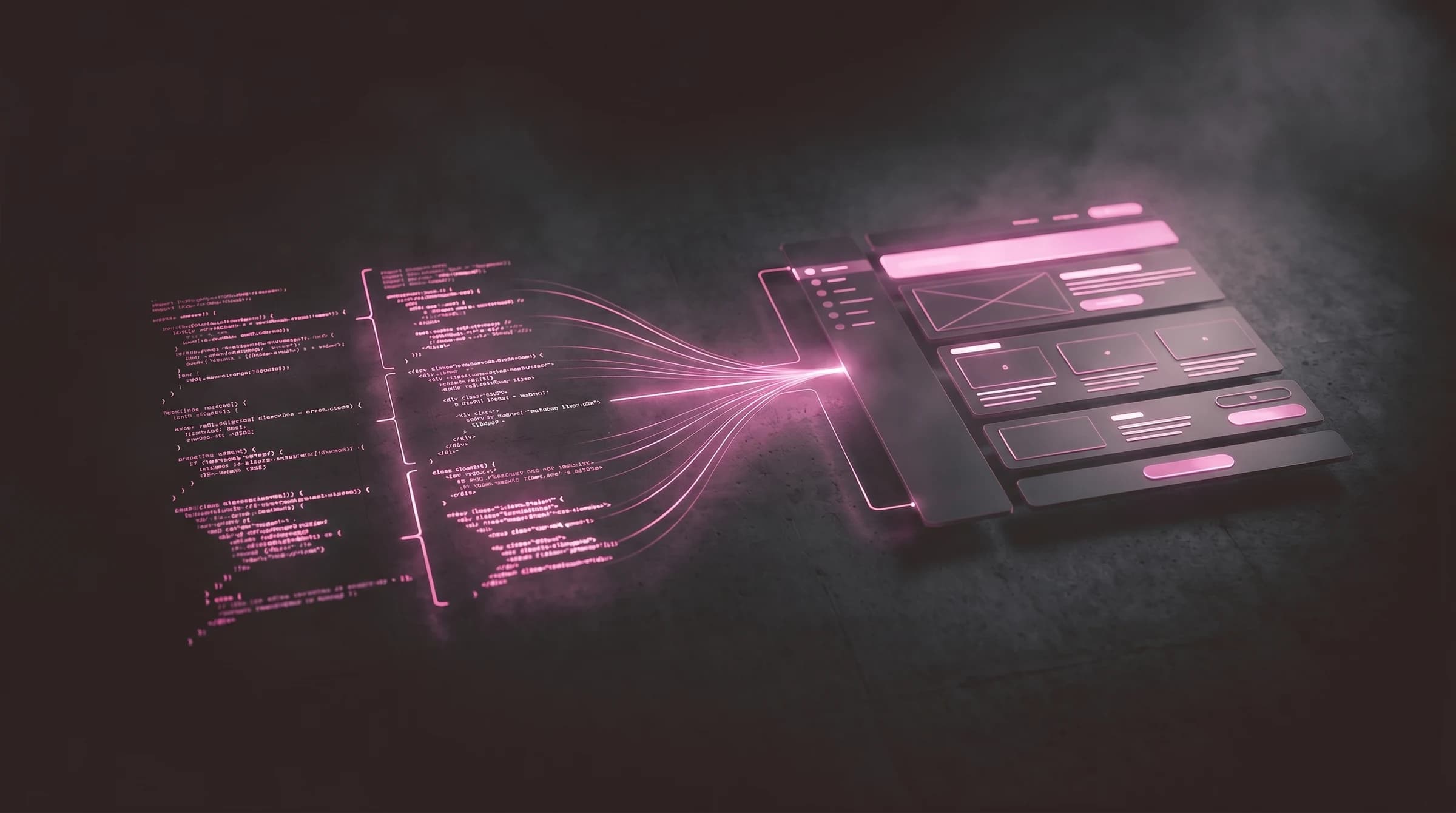
Product engineering for teams that need the real thing, not a prototype that demos well. One senior team takes the services, the data model, the dashboards and the mobile app, and ships them together with their tests and their deployment.
- OneTeam, one system
- YoursCode & repository
- TestedBefore it ships
- LiveNot a prototype
Sectors that trust us
What is product engineering?
Product engineering is building a working product end to end rather than handing over a design and hoping someone wires it up. It covers the decisions that are expensive to reverse: the shape of the data, the boundaries between services, and how a release reaches production.

- Engineering or agency build?
- An agency build ends at launch. Product engineering assumes the product keeps changing, so the architecture, the tests and the deployment are built for a second year of work — not just for the demo that wins the contract.
Key takeaways
One team: owns services, data, web and mobile together, so nothing falls between the seams.
Tests ship with features: every path a user can take has a test that runs before the change can merge.
Data model first: the schema is agreed and migrated before any screen is drawn or estimated.
You own it: the repository, the pipeline and the cloud accounts are in your name from week one.
Fixed scope per phase: a priced phase or a dedicated monthly team, never an open-ended hourly bill.
Why products stall
Where product builds go wrong, and how we build them instead.
Where builds go wrong
Screens first, with the data model inferred later.
No tests, so the second change breaks the first.
Deployment is one person with a terminal.
Only the team that built it can change it.
How SiaSol builds
The data model is agreed before the UI exists.
Every user path has a test that runs on push.
One command deploys; the same one rolls back.
Handover is a dated document and a walkthrough.
What we build
Product engineering from the data model to the app store.
One team for the whole job: architecture, services, the screens people use, and the pipeline that ships them.
Architecture
Boundaries, contracts and failure behaviour per service, written before it is built.
Data modelling
The schema, its migrations and the constraints that make a bad state impossible.
Dashboards
The screens the business runs on, built for the operators who open them all day long.
Mobile apps
One codebase for iOS and Android, with offline behaviour decided, not discovered.
Integrations
Payments, identity, messaging and whatever you already pay for, wired with retries.
Deploy & monitor
A release pipeline, a staging environment and alerts that fire before a customer calls.
Built to hand over
A product you cannot maintain is a liability.
Every engagement assumes someone else will maintain it: your team, a new hire or another vendor. That assumption changes the work. Boring technology over clever technology, explicit configuration over convention, and a README a competent engineer can follow without us.
Your name on everything — the repository, the pipeline and the cloud accounts are yours from the first week.
Decisions on record — each architecture decision is written down with its date and its reason.
No private runtime — no SiaSol framework, hosting layer or licence sits anywhere in the stack.
The current system, the data and the one person who can decide, in two weeks.
Included in every build
Everything that ships with a build.
None of these is an extra; all are part of the first release.
Design system and components
Tokens, components and states.
Arabic & RTL
Mirrored layouts and real Arabic content in the build from the first week.
Authentication
Sign-in, roles and sessions, with the audit trail that regulators ask for.
Automated tests on every push
Every user path covered, on every push.
CI/CD pipeline
One command to staging, one to production, and the same one to roll back.

Monitoring
Alerts on your own accounts that fire before a customer has to call you.

Documentation and a README
Enough for any engineer to follow.

Accessibility
Keyboard, contrast and screen-reader checks on every single screen we ship.

Performance budget
Page weight and response times measured on every build, not at the end.

Security review
Dependency scanning, secrets in your vault and a threat model on paper.
Staging environment
A production-shaped copy where every change must prove itself before release.

Handover pack
A dated document listing every account, secret location and routine task.
Built to order · yours
Describe it and we build it, with no ceiling.
Marketplaces, booking engines, operator consoles and dashboards: the four frames below are mock-ups, each shipped as code.
Private charter
SOONER
Depart on your hour, not the airline's. Scroll the story →
FROM RIYADH
TO ANYWHERE
80
Destinations
24/7
Concierge
6 min
Avg. boarding
WHEELS UP
TODAY.
New arrivals — AW26
MADE.
Free delivery over SAR 500 · 30-day returns ·
Free delivery over SAR 500 · 30-day returns ·
Best sellers
Linen Abaya
SAR 420
Wool Overcoat
SAR 1,180
Leather Tote
SAR 960
Knit Cardigan
SAR 540
Suede Loafers
SAR 870
Silk Scarf
SAR 310
Design studio — Est. 2016
We build brands and digital products where design, story and engineering meet.
Branding · Web Design · Development · Motion ·
Branding · Web Design · Development · Motion ·
Selected Work
2026 — 12Dune — Brand
Identity · Web
Sakan — Commerce
Storefront · Motion
Mizan — SaaS
Product · App
Falak — Studio
3D · WebGL
A site is the first meeting. We make sure it lands.
Run operations in one place
FIX. GROW.
The ops platform your field teams actually open.
Dispatch
Assign in seconds
Insights
Live metrics
Scale
Zero-downtime
The stack we ship
Proven tools, with no lock-in anywhere.
- TypeScript
- Next.js
- React
- Node.js
- NestJS
- PostgreSQL
- Redis
- Docker
- Kubernetes
Why SiaSol
A product team with a delivery record, not a slide deck of promises.
A small senior team in Cairo, Riyadh and Dubai, working in Arabic and English on live systems.
Senior only
The people in the kickoff are the people writing the code, start to finish.
Two languages
Arabic and English in the product, the docs and the room, from day one.
Regulated work
Banking, healthcare and government delivery constraints, handled as routine.
We hand over
Documented systems and dated handovers, not retainers you cannot leave.
How it works · our method
The SiaSol five-phase method, applied to this service.
- 01
Discover
Most technology projects fail long before the first line of code — they fail at the question.
- 02
Diagnose
Every slow process has an owner and a cost.
- 03
Design
Architecture is a set of decisions you live with.
- 04
Deliver
Software not in production is just cost.
- 05
Evolve
The handover is the point, not the end.
Where we work
Close where it counts, bilingual everywhere
Egypt: Cairo (HQ) and nationwide delivery
Saudi Arabia: Riyadh, with teams on client time zones
Gulf and beyond: Arabic and English, one delivery standard
Cost & engagement
Product engineering: cost and engagement
Cost follows the surface area: how many user roles, how many integrations, and whether mobile is in the first release. We quote a phase at a time, never a year, and every phase ends with something live.
- Per phase · fixed scope
First release
One user journey, live, with its data model, pipeline and tests. Quoted up front after discovery.
- Per phase · quoted after discovery
Full platform
Several roles, mobile and integrations, delivered in phases that each stand alone and ship live.
- Monthly · dedicated
Embedded team
A standing team inside your planning and your repository, for a roadmap that keeps moving.
Software that runs a business, not a brochure about it.
Most of what we build has a login. Operator consoles, booking engines, member portals, back-office tools and the public site in front of them, all in one repository with one deployment and one on-call path. When a brochure site is all you need we say so and point you at a good template.
Proof
Products we have built and handed over
FAQ
What to ask about Product engineering.
01What is product engineering, exactly?
02How is this different from hiring freelancers?
03Do we own the code?
04How long does a first release take?
05Can you work with our existing team?
06How do you handle scope changes?
07What do you need from us to start?
08What happens after launch?
Related services
Often paired with this
- View
Nearshore engineering teams
Senior engineers on your hours, in your standups.
Software & Product - View
Custom software development
Built around how you operate, not around a template.
Software & Product - View
Mobile applications
Cross-platform or native — whichever the case earns.
Software & Product



Learn more
From the journal
- Applied AI
The dashboard that nobody opens
Most reporting projects deliver screens, not decisions. How to tell which one you are buying before it is built: name the decision, name the person who makes it, and name what they would do differently once the number moves.
2026-08-26Read - Applied AI
Automate the decision, not the click
Robotic process automation copies a human, click for click, and inherits every reason the work was slow. Useful automation removes the reason the human was needed at all. How to tell the two apart before the first bot is bought.
2026-08-12Read - Engineering
Who owns your cloud account?
The question that decides whether you have a vendor or a landlord. Ask it before the first invoice: who holds the root account, who pays the bill, where the Terraform lives, and what happens to all of it the day you stop paying us.
2026-07-29Read







Ready for a product that holds up in production?
Tell us what the product has to do. We come back with an architecture, a phase plan and a number.
Scope my product