
Platform modernisation
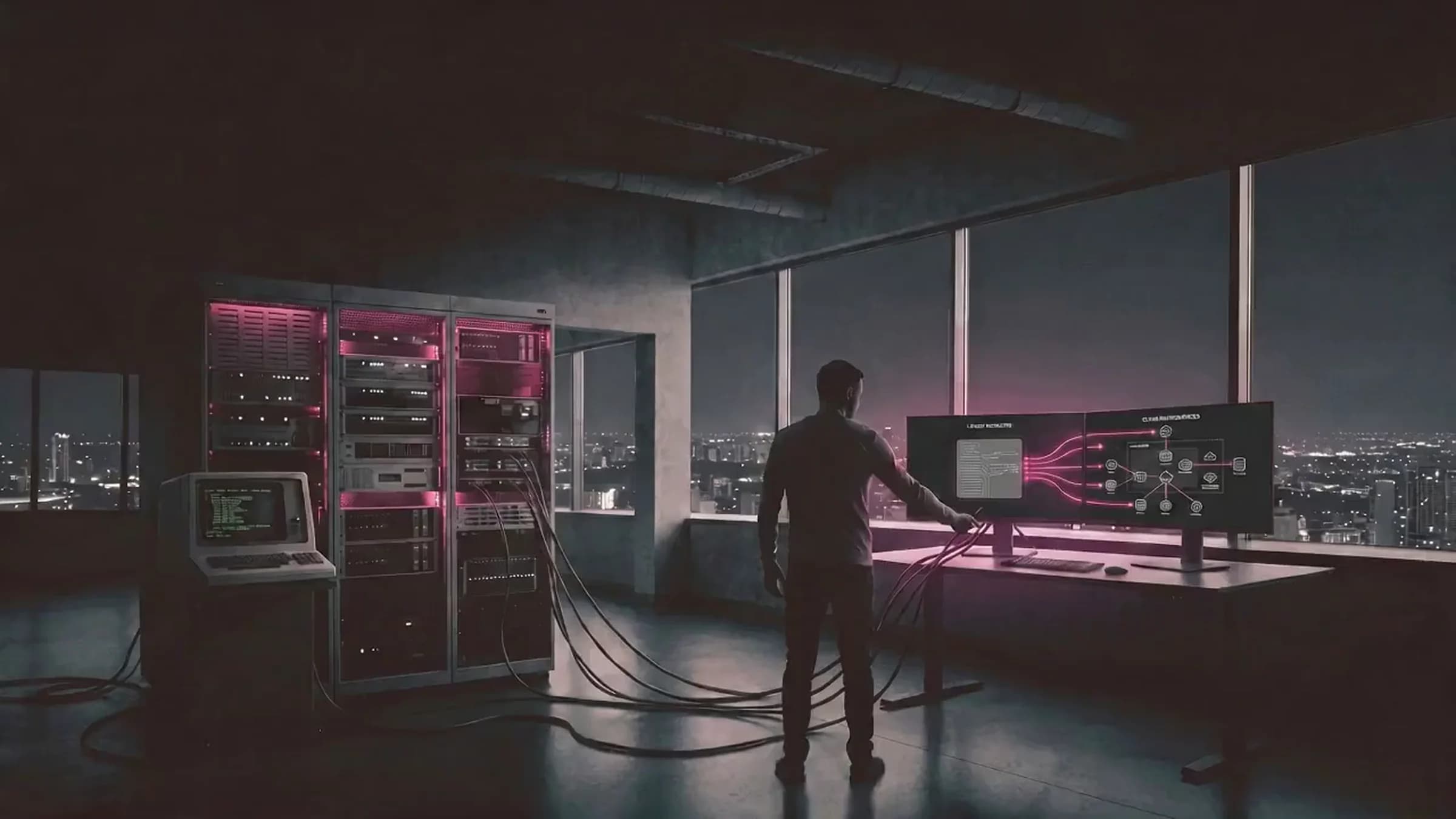
Modernisation for a system that still earns money and cannot be switched off for a rewrite. We replace it a seam at a time, with the old path running in shadow until the new one has been proven on the same traffic, in the same month.
- LiveThroughout the work
- SeamAt a time, not all
- ShadowRun before cutover
- BackOut at every step
Sectors that trust us
What is modernisation?
Modernisation is moving a working system onto something maintainable without an outage and without a period where neither version is trustworthy. It is mostly a sequencing problem: which seam to cut first, how to prove the replacement on real traffic, and when the old path can finally be deleted.

- Modernise or rewrite?
- A rewrite asks the business to stop needing changes for a year, which no business can honestly agree to.
- Is the old code the problem, or the process around it?
- Usually not. The problem is that nobody can change it safely, which is a testing and deployment problem.
Key takeaways
Always live: the system stays in service for the whole of the work, with no freeze agreed.
Proven in shadow: each seam serves real traffic silently before it is allowed to answer anyone.
Rehearsed rollback: every step has a way back that has been run on purpose, not just written down.
Deleted on a date: the old path is switched off by a dated plan rather than left running forever.
Yours to change: your team can alter the result without a call to us, which is the real test.
Why modernise
Leaving it alone only defers the risk.
How rewrites fail
A freeze is agreed, then quietly broken by month two.
Both systems run for years because neither is trusted.
The new version is tested on invented data, not real.
Cutover is one night, with no way back after it.
How we replace
The seam is chosen for value, and shipped in weeks.
Old and new run together on the same real traffic.
The two are compared daily until they stop differing.
Rollback is rehearsed, so cutover is boring.
What we replace
Modernisation delivered seam by seam, with the system still live.
Seam assessment
Where the system can be cut, in which order, and what each cut is worth once it has landed in production.
Data migration
Schema, backfill and the reconciliation that proves both stores agree before the old one is switched off.
Shadow running
The new path serving the same live requests, its answers compared against the old ones but not yet returned.
Decommissioning
The old path switched off on a dated plan, which is the only real end of the work and the part most teams skip.
Three routes
One route per component, chosen by evidence.
- Lift
Rehost
The running system moved onto managed infrastructure, its code left exactly as it is.
Weeks, lowest risk - Most chosenReshape
Replace by seam
One boundary at a time, old and new sharing live traffic, the old path then deleted.
Months, no outage - Rebuild
Rewrite a part
Only where code resists every other route, and only a part small enough to finish.
Rare, by exception
The stack we move to
Current, well supported, deliberately boring.
- TypeScript
- Node.js
- PostgreSQL
- Kubernetes
- Docker
- Kafka
- Terraform
- GitHub Actions
How it works · our method
The SiaSol five-phase method, applied to this service.
- 01
Discover
Most technology projects fail long before the first line of code — they fail at the question.
- 02
Diagnose
Every slow process has an owner and a cost.
- 03
Design
Architecture is a set of decisions you live with.
- 04
Deliver
Software not in production is just cost.
- 05
Evolve
The handover is the point, not the end.
Where we work
Close where it counts, bilingual everywhere
Egypt: Cairo (HQ) and nationwide delivery
Saudi Arabia: Riyadh, with teams on client time zones
Gulf and beyond: Arabic and English, one delivery standard
Cost & engagement
Modernisation: cost and engagement
Cost follows the number of seams and how much data has to move. We quote the assessment alone, because any number before the map is a guess.
- Fixed · two to three weeks
Seam assessment
The map of where the system can be cut, in order, with a number against each.
- Per seam · quoted from the map
Seam delivery
One seam replaced, proven in shadow, and the old path dated for deletion.
- Monthly · dedicated
Embedded team
A standing team working through the map alongside yours.
Why teams bring us the system nobody wants to touch.
Because we are willing to leave most of it alone. The brief is to make the system changeable, not to make it ours, so the assessment names the seams worth cutting and says which parts should stay. The people who kept it running are our main evidence, and they still own it when we leave.
FAQ
What to ask about Platform modernisation.
01Can we keep shipping features meanwhile?
02What does shadow running actually mean?
03How long before we see anything?
04What if the assessment says not to modernise?
05Do you work with our existing team?
06Can the old system be switched off completely?
07Who owns the result when you leave?
Related services
Often paired with this
- View
Product engineering
The whole product shipped as one system, tests and all.
Software & Product - View
Nearshore engineering teams
Senior engineers on your hours, in your standups.
Software & Product - View
Custom software development
Built around how you operate, not around a template.
Software & Product


Learn more
From the journal
- Engineering
What an integration actually costs
The API call is the cheap part. The expensive part is deciding what happens when it fails at 2am: who is paged, what is retried, what is written down and what is quietly dropped. A costing method that counts the failure paths first.
2026-09-09Read - Applied AI
The dashboard that nobody opens
Most reporting projects deliver screens, not decisions. How to tell which one you are buying before it is built: name the decision, name the person who makes it, and name what they would do differently once the number moves.
2026-08-26Read - Applied AI
Automate the decision, not the click
Robotic process automation copies a human, click for click, and inherits every reason the work was slow. Useful automation removes the reason the human was needed at all. How to tell the two apart before the first bot is bought.
2026-08-12Read






Ready to replace the system without ever switching it off?
Tell us what the system does today and who depends on it. We come back with a seam map, an order of work and a number.
Book assessment